


.avif)

- Sales intelligence tools aggregate data from multiple sources — CRM, intent signals, firmographics, technographics — to give reps actionable buyer insights before every interaction
- They differ from CRMs: a CRM stores records; a sales intelligence tool enriches them with context like buying signals, org charts, and competitive activity
- Key capabilities include lead enrichment, account prioritization, real-time alerts on buyer behavior, and competitive monitoring
- AI-native platforms like SiftHub go beyond data aggregation by synthesizing insights across calls, emails, and knowledge bases into ready-to-use answers
- The best sales intelligence tools embed insights directly into rep workflows — inside email, CRM, and chat — rather than requiring a separate login
- Sales intelligence tools aggregate data from multiple sources — CRM, intent signals, firmographics, technographics — to give reps actionable buyer insights before every interaction
- They differ from CRMs: a CRM stores records; a sales intelligence tool enriches them with context like buying signals, org charts, and competitive activity
- Key capabilities include lead enrichment, account prioritization, real-time alerts on buyer behavior, and competitive monitoring
- AI-native platforms like SiftHub go beyond data aggregation by synthesizing insights across calls, emails, and knowledge bases into ready-to-use answers
- The best sales intelligence tools embed insights directly into rep workflows — inside email, CRM, and chat — rather than requiring a separate login
Think about the last time you built a prospect list. It involved switching between LinkedIn, your CRM, a couple of spreadsheets, and maybe even Google to check if that company recently raised funding. By the time you finished, the list was already outdated, people move jobs, companies pivot, and the data goes stale fast.
That’s where sales intelligence tools come in.
At their core, sales intelligence tools (also known as sales intelligence software) are platforms that collect, enrich, and analyze company and contact data, ensuring that sales teams always have the most accurate and relevant information at their fingertips.
Instead of relying on guesswork, sales reps get real-time insights into who to talk to, when to reach out, and what message will resonate.
In modern B2B sales intelligence, this doesn’t just mean having a bigger contact database. It’s about empowering revenue teams with context, buyer intent signals, company news alerts, and predictive insights that shorten sales cycles and open the door to better conversations.
In short, sales intelligence tools turn scattered information into actionable intelligence. And in 2025, that’s no longer a nice-to-have; it’s the difference between hitting quota and missing it.
Key benefits of using sales intelligence tools
Sales intelligence software isn’t just about collecting data; it’s about giving your team the ability to act faster, personalize better, and focus on the right opportunities.
Here are some of the biggest benefits companies see when they bring the best sales intelligence tools into their tech stack:
1. Higher-quality leads and smarter prospecting
No more wasting hours chasing leads that don’t fit your ICP. With sales data enrichment and advanced filters, sales reps can zero in on accounts that are most likely to convert.
2. Personalized outreach that gets replies
When you know a prospect’s latest funding round, tech stack, or hiring pattern, your outreach can go beyond “just checking in.” AI sales intelligence tools surface these signals in real time, so your emails and calls feel relevant, not random.
3. Shorter sales cycles
The right data at the right time means fewer dead ends. By spotting buying intent earlier, reps can engage before competitors, speeding up the entire deal cycle.
4. Better account prioritization
Not all opportunities are created equal. Sales intelligence tools highlight which accounts are “warming up,” so teams know where to focus their energy for the highest ROI.
5. Stronger sales-marketing alignment
When both teams share the same intelligence on accounts and contacts, campaign targeting improves, hand-offs get smoother, and pipeline quality goes up.
In other words, sales intelligence tools don’t just give you more data. They give you the right data and the context to turn that data into revenue.
Core features of the best sales intelligence tools
Not all sales intelligence software is created equal. While most promise better data and insights, the real value comes down to whether they can actually help your team sell smarter every day.
Here are the core features that separate the best sales intelligence tools from the rest:
1. Accurate, real-time data
Outdated data kills momentum. The best platforms constantly refresh company and contact information so reps are never guessing about titles, emails, or phone numbers.
2. Buyer intent signals
Modern B2B sales intelligence goes beyond static profiles. Tools that track intent data show when accounts are actively researching solutions in your category, giving you the perfect window to reach out.
3. CRM and tech stack integrations
A tool is only as good as the ecosystem it fits into. Sales intelligence tools should plug seamlessly into CRMs like Salesforce or HubSpot and connect with your engagement tools, so reps can act on insights without leaving their flow.
4. Smart prospecting and segmentation
Whether you want to filter by industry, revenue, tech stack, or geography, advanced search options help narrow down the universe of prospects to the ones that truly matter.
5. News and trigger alerts
The best time to reach out is when something meaningful changes for a prospect. Sales intelligence software that delivers real-time alerts on funding rounds, leadership hires, or expansions ensures you never miss a timely opener.
These features turn sales intelligence tools from simple databases into engines for smarter prospecting and more personalized engagement.
Top sales intelligence tools in 2025
The market for sales intelligence platforms is crowded, but a handful of tools consistently stand out for their scale, accuracy, and innovation. Below, we dive deeper into the best sales intelligence tools available in 2025, along with their unique strengths.
1. ZoomInfo (AI lead gen tool)
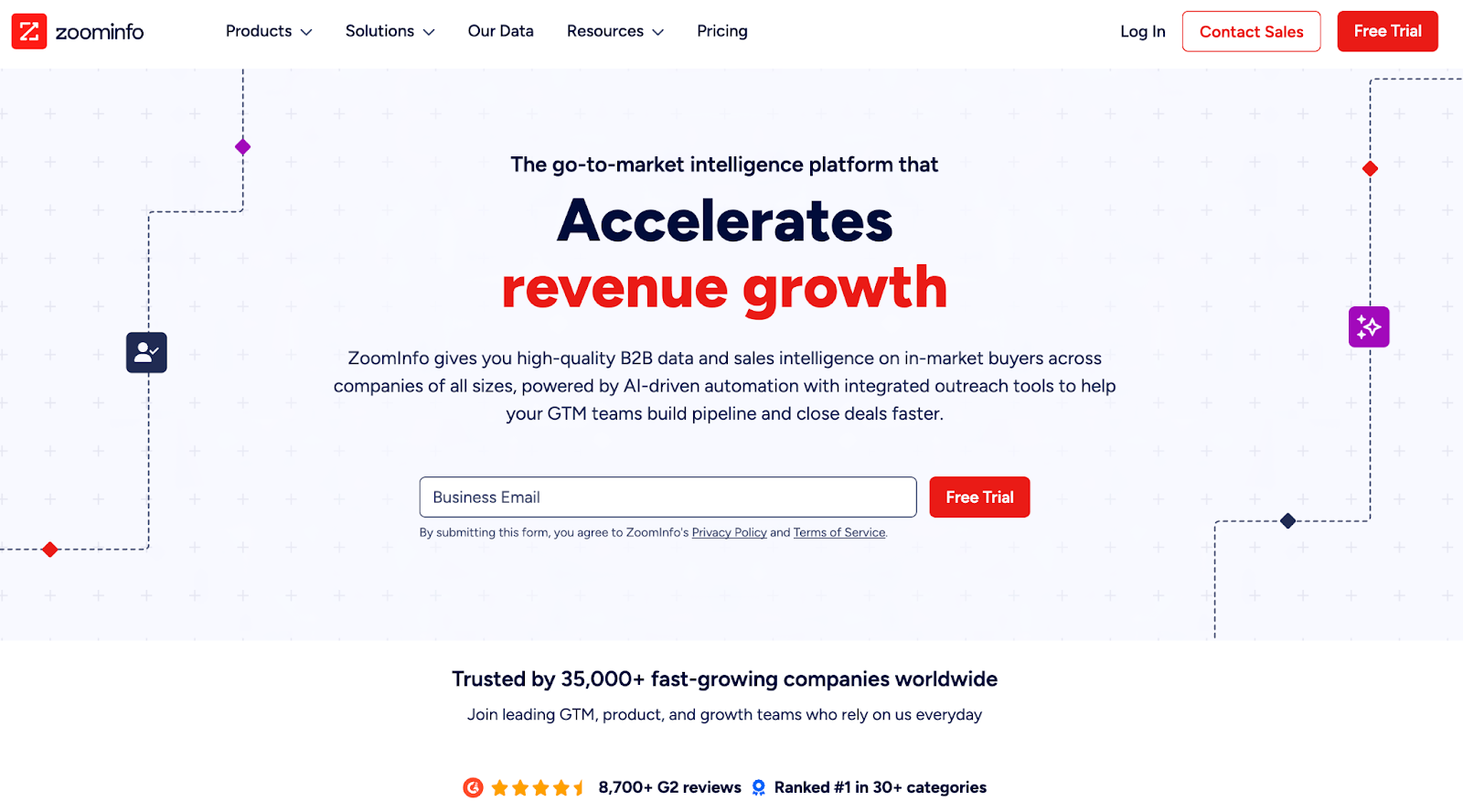
ZoomInfo remains one of the most widely recognized sales intelligence solutions. Known for its massive B2B contact database, ZoomInfo provides direct dials, verified emails, and deep company profiles. What makes it powerful is its buyer intent data, which helps reps identify accounts that are actively researching topics relevant to your product.
ZoomInfo also offers advanced features like website visitor identification, technographic data, and pipeline velocity insights, making it a strong choice for large teams with complex sales workflows. However, its scale comes with a higher price point, and smaller businesses may find it overwhelming.
Best for: Enterprise teams that need global coverage and predictive sales insights.
2. LinkedIn Sales Navigator

As part of the LinkedIn ecosystem, Sales Navigator is a go-to sales intelligence tool for relationship-driven prospecting. It enables reps to filter prospects by industry, seniority, geography, and more, while surfacing warm introductions through shared connections.
Sales Navigator also provides real-time sales triggers, like job changes or company updates, making outreach timely and relevant. It integrates smoothly with CRM systems, so data flows directly into your pipeline.
The biggest limitation is that it’s only as powerful as the LinkedIn network, so while coverage is strong for professionals, it may lack the same breadth of contact databases as other intelligence platforms.
Best for: Teams focused on social selling and building high-quality relationships.
3. Cognism (sales intelligence solution)
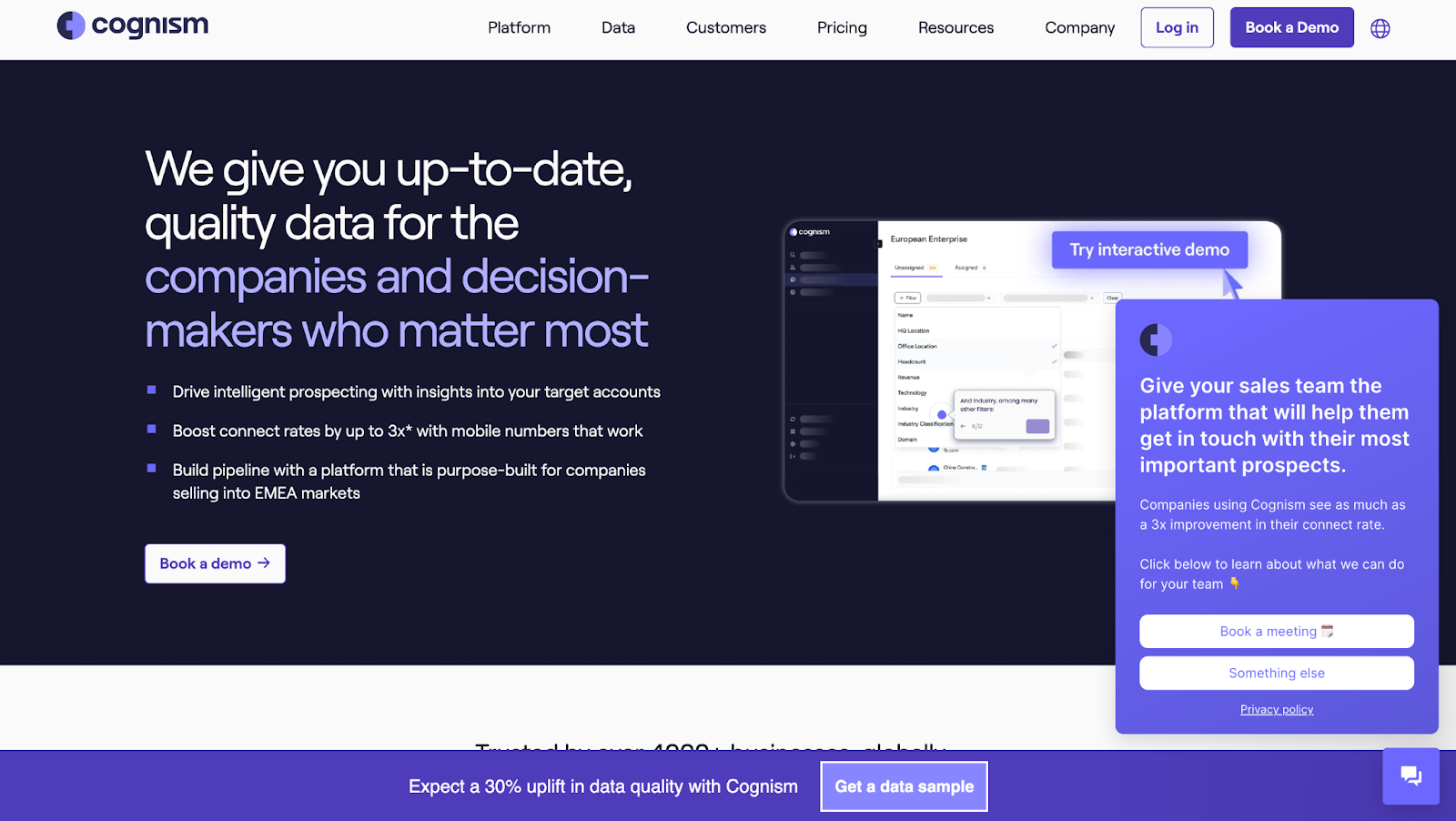
Cognism has built a strong reputation as a GDPR-compliant B2B sales intelligence platform, making it especially popular across Europe. It provides verified phone numbers, emails, and contact enrichment for outbound prospecting, while ensuring strict adherence to gdpr compliance standards.
A standout feature is its Diamond Data®, which emphasizes accuracy through phone verification and live validation. Cognism also includes intent signals and integrates directly with sales engagement platforms like Outreach, ensuring reps can act quickly on insights.
Best for: Global companies, especially those selling into Europe, that prioritize compliance and data quality.
4. Apollo.io
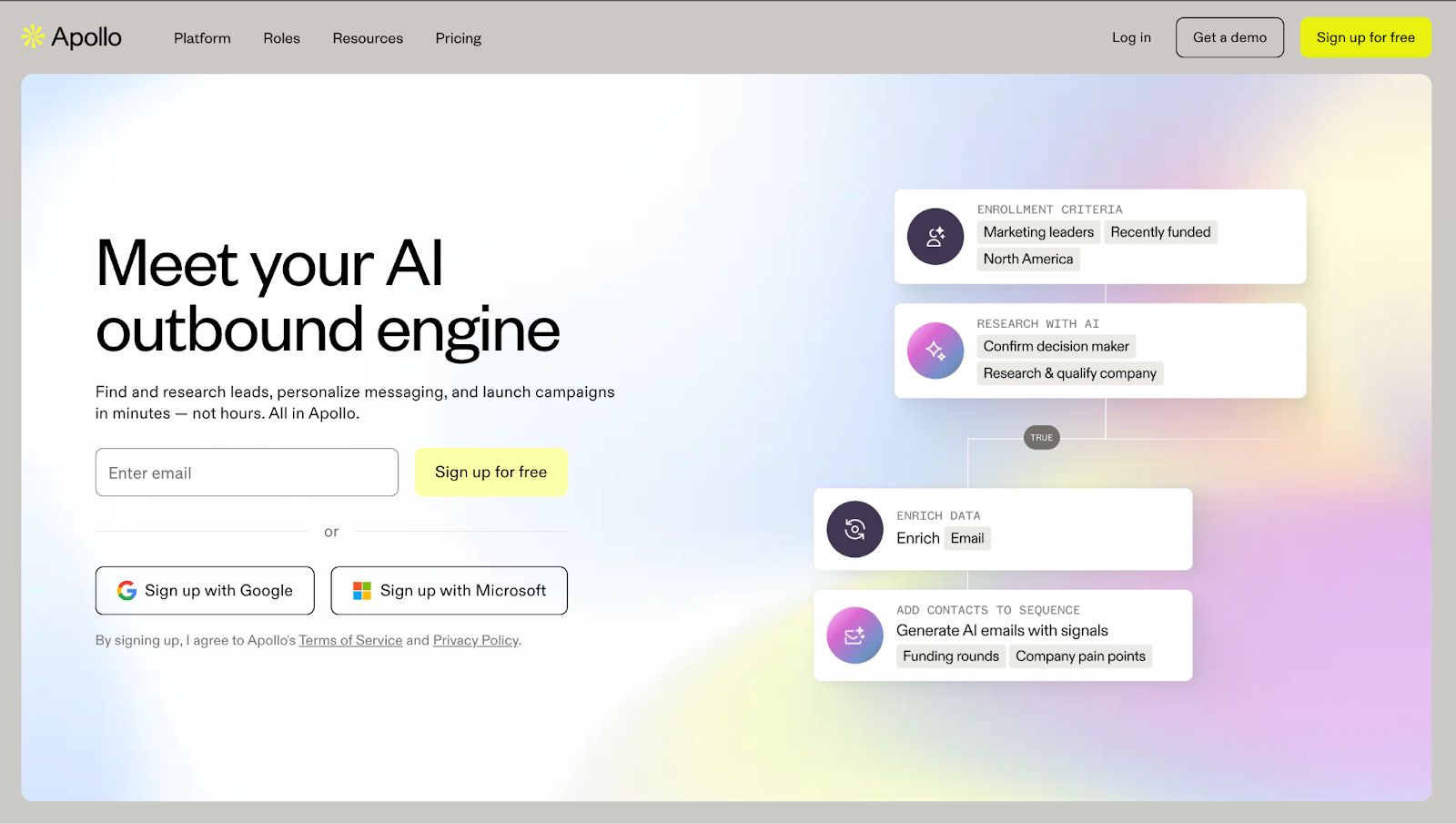
Apollo.io positions itself as both a sales intelligence tool and an outreach automation platform, making it a favorite for teams that want an all-in-one solution. It provides a robust contact database, intent data, and enrichment features, while also offering built-in email automation, cold outreach, and sequencing capabilities.
What makes Apollo.io stand out is its affordability compared to enterprise-grade platforms like ZoomInfo. It’s a strong choice for startups and SMBs looking to combine lead generation tools with outreach automation in one place.
Best for: Growing sales teams that want intelligence plus execution without buying multiple tools.
5. Clearbit
Clearbit specializes in real-time data enrichment. Rather than just providing static contact lists, Clearbit connects with your website, CRM, and marketing stack to instantly enrich inbound leads with firmographic data, technographic data, and account research.
This makes it a valuable tool for marketing and sales alignment, powering account-based marketing campaigns and improving lead qualification. Clearbit is often used to improve conversion rates by ensuring every inbound lead is complete, accurate, and routed correctly.
Best for: Marketing and sales teams that want to enrich inbound leads and run more targeted campaigns.
6. Dealfront
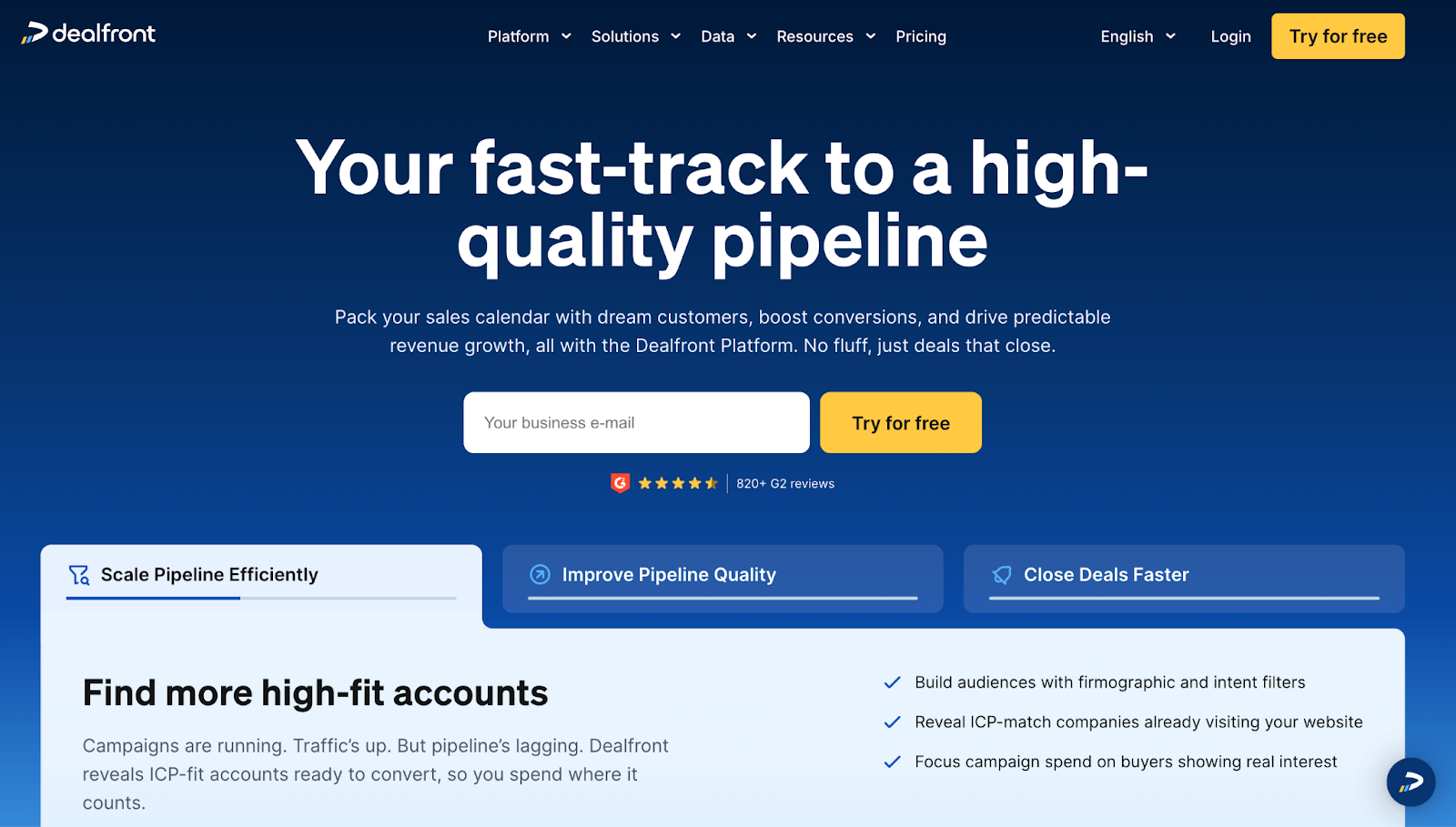
Formerly known as Echobot and Leadfeeder, Dealfront is a sales intelligence platform with a strong focus on the DACH market (Germany, Austria, Switzerland). It offers company profiles, buyer intent data, and website visitor identification, making it ideal for teams selling in Europe.
Dealfront also provides compliance-friendly data sourcing, aligning with data privacy regulations. While its coverage may not be as global as ZoomInfo's, it excels in depth and accuracy for the regions it serves.
Best for: Sales teams focused on European markets, especially in the DACH region.
7. 6sense / Demandbase
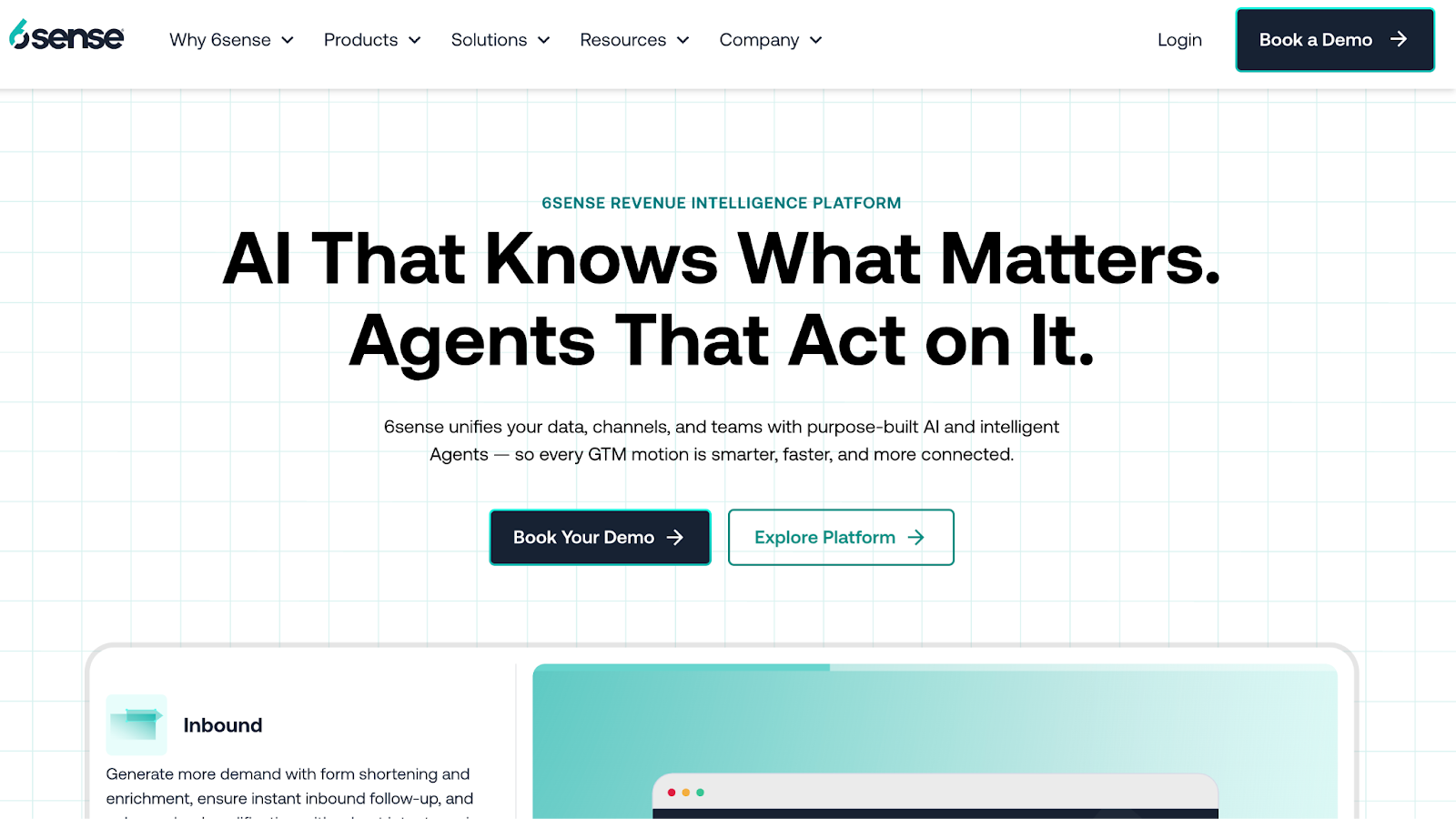
6sense and Demandbase are leaders in account-based sales intelligence solutions. They focus heavily on predictive analytics and buyer intent data, helping enterprise teams prioritize accounts that are most likely to convert.
These platforms integrate with CRM systems and sales engagement tools to provide holistic revenue intelligence across the funnel. They are particularly effective in account-based marketing strategies, where aligning sales and marketing around the same target accounts is critical.
The trade-off is complexity and cost, which may be too heavy for smaller teams but invaluable for large enterprises pursuing deal acceleration.
Best for: Enterprise organizations running ABM programs and complex, multi-stakeholder deals.
Each of these sales intelligence platforms offers something unique, from compliance-first data to AI-powered sales insights and integrated outreach tools. The right choice depends on your team’s size, budget, and where you need the most help, whether it is global coverage, lead generation, or execution.
How to choose the right sales intelligence software
With so many options in the market, picking the right sales intelligence tool can feel overwhelming. The key is to focus less on who has the biggest database and more on which platform fits your sales motion. Here are a few things to keep in mind when evaluating your options:
Match features to your sales process
If you are an SMB team, you might prioritize affordability and quick setup. Enterprise teams may care more about advanced intent data and deep integrations with a complex tech stack.
Check data coverage and accuracy
Not all tools specialize in the same markets. Some excel in North America, while others focus on Europe or specific industries. Make sure the platform covers the geographies and verticals you sell into and that the data is consistently refreshed.
Look for seamless integrations
Your reps will only use a tool if it makes their day easier. Choose sales intelligence software that integrates smoothly with your CRM, sales engagement platforms, and marketing automation tools.
Evaluate compliance and security
Data privacy is not optional anymore. Confirm that the provider follows standards like GDPR and CCPA and that their data sources are transparent.
Think about scalability and cost
What works for a 10-person team may not scale for a 200-person global salesforce. Ask how pricing grows as you expand and whether the platform can handle the volume you need.
Choosing the right tool is about finding balance. The best sales intelligence software is the one that gives your team actionable insights without slowing them down.
Sales intelligence tools vs sales engagement platforms
It is easy to confuse sales intelligence with sales engagement. Both are critical to a modern revenue stack, but they play very different roles.
Sales intelligence tools focus on what you know. They provide the data, insights, and signals that tell you which accounts to target, when to reach out, and what to say.
Sales engagement platforms focus on what you do. Tools like Outreach or Salesloft help teams execute that outreach at scale through email sequences, call tracking, and task automation.
When used together, the two are powerful. Imagine knowing that a target account just raised a Series C round, thanks to your sales intelligence software. That insight feeds directly into your sales engagement platform, where you launch a personalized sequence congratulating them and positioning your product.
Sales intelligence tells you where to aim. Sales engagement makes sure you hit the target.
The future of B2B sales intelligence
Sales intelligence has come a long way from static databases and manual list-building. The next wave is not just about having more data; it is about turning that data into real-time guidance that helps reps win deals faster.
AI-powered insights
The future of sales intelligence lies in AI. Instead of waiting for a rep to search for information, platforms will proactively surface the next best action. Imagine your system alerting you that a prospect is researching competitors and recommending the exact message to send.
Predictive analytics and account scoring
Rather than treating every lead the same, advanced sales intelligence tools will use predictive models to score accounts by likelihood to buy. This helps teams prioritize high-value opportunities and avoid wasting cycles on low-fit prospects.
Continuous, real-time data
Stale data will become a thing of the past. As more platforms integrate directly with digital footprints like website visits, product usage, and intent signals, sales teams will operate with live intelligence that updates instantly.
Moving from data to action
The biggest shift is that sales intelligence will no longer stop at “knowing.” The most effective platforms will connect intelligence with execution, bridging the gap between insight and action.
For sales leaders, this future means less time hunting for information and more time engaging buyers with precision. The question is not whether sales intelligence will evolve, but how quickly teams adopt the tools that go beyond data and actually accelerate revenue.
Where SiftHub fits in
Most sales intelligence tools stop at surfacing information. They tell you who to reach out to and what signals to watch, but they don’t help you with what happens next, the hard work of actually responding to buyers, filling out RFPs, or generating collateral that moves deals forward.
This is where SiftHub takes a different path.
SiftHub is not a traditional sales intelligence or sales engagement tool. It is an AI-driven sales enablement platform that acts as a central hub for all of your content scattered across repositories, wikis, and sales tools. Instead of leaving reps to dig through endless folders or ping subject matter experts for answers, SiftHub enables accelerated knowledge discovery and automated response creation.
What makes SiftHub different
- Sales enablement first: SiftHub is built to empower sales and pre-sales teams with instant access to the knowledge and content they need, automating collateral creation and improving rep productivity.
- Content generation & knowledge management: While sales intelligence platforms focus on prospect data, SiftHub focuses on the messy middle, unifying content, enabling seamless search, and generating accurate, on-brand responses in seconds.
- AI sales engineering platform: From drafting RFPs and security questionnaires to handling complex product questions, SiftHub functions as your AI sales engineer. It can deliver a first draft of an RFP response in under 10 minutes, freeing teams from hours of manual work.
How it fits into the stack
SiftHub complements, rather than replaces, your existing sales intelligence and engagement platforms. It integrates with tools like Salesforce, HubSpot, and Slack to bridge the gap between intelligence and execution. The result is a connected workflow where teams not only know which accounts to target but also have the content and answers ready to win them.
In short, if sales intelligence tells you where to aim, SiftHub ensures you have the right message, content, and answers to hit the target. Learn more about SiftHub.
Turning sales intelligence into revenue
Sales intelligence tools have become essential for modern sales teams. They deliver the data, insights, and signals that help you identify the right accounts, engage at the right time, and build stronger pipelines. But intelligence alone is not enough. The real impact comes when those insights translate into action.
That is where SiftHub changes the game. Instead of stopping at “who to talk to,” SiftHub equips your team with the content, answers, and responses that actually move deals forward. From RFPs and security questionnaires to buyer Q&A and custom sales collateral, SiftHub ensures your sales and pre-sales teams can respond faster, work smarter, and close with confidence.
The future of revenue growth will not be defined by who has the most data, but by who can act on it the fastest. With SiftHub, your team gets both speed and precision.
Book a demo to see how SiftHub transforms sales intelligence into action and helps your team accelerate revenue.